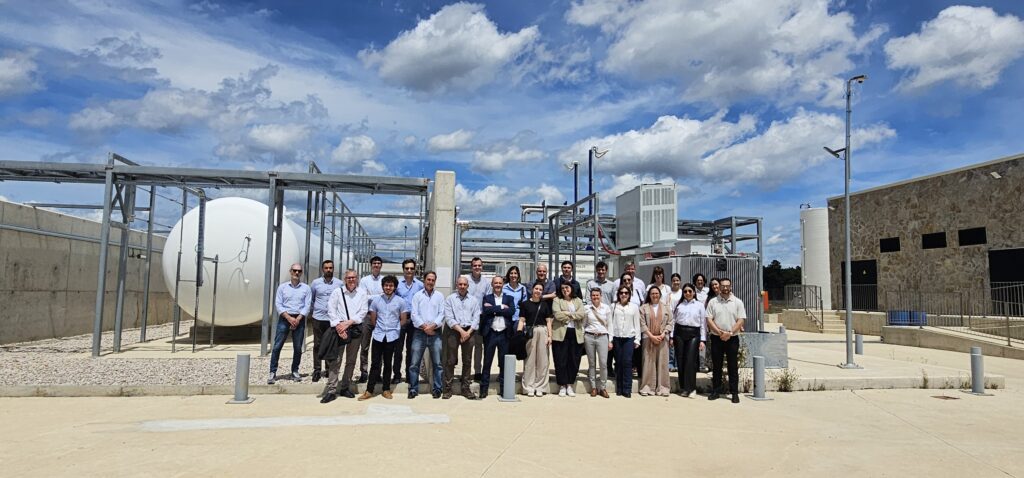
On 19-20 May, the CyLH2Valley consortium gathered in Soria, Spain, for its second General Assembly, hosted by Junta de Castilla y León and coordinated by Fundación CARTIF.
The meeting opened with welcoming remarks from the Territorial Delegate of the Junta de Castilla y León in Soria and the Director of the regional public energy entity of the Junta de Castilla y León. Their participation highlighted the strong institutional support that the region continues to provide to the initiative and to the broader development of green hydrogen technologies in the territory.
Key discussions during the General Assembly focused on the progress achieved during the first phase of the initiative and on the next activities planned for the coming months. Partners reviewed the advancement of several core actions, including the expansion of the stakeholder network, the development of a comprehensive evaluation framework based on metrics and KPIs, and the co-design of the large-scale Hydrogen Valley model.
Particular attention was also dedicated to the ongoing development of the different pilots. Discussions focused on hydrogen-derived synthetic fuels, distribution infrastructure, mobility applications, refuelling solutions, and financial aspects, offering partners the opportunity to compare approaches and share updates on the current status of each initiative.
Consortium partners also discussed the definition of financial and investment plans, the alignment of business cases, and the ongoing exchange of knowledge with other European Hydrogen Valleys to support future replication strategies. Dissemination and communication activities, together with the development of exploitation pathways for key results, were also among the main topics addressed during the meeting.
One of the most valuable aspects of the General Assembly was the continuous exchange among consortium partners. Discussions encouraged an open and constructive comparison of experiences, allowing participants to share expertise, identify strengths and openly reflect on the practical challenges in building a large-scale hydrogen ecosystem. Despite the technical and operational complexities of such an ambitious undertaking, the meeting highlighted the consortium’s shared determination to turn the project’s vision into concrete solutions through collaboration.
The General Assembly also provided an opportunity to reflect on the next steps leading towards the conclusion of the project’s first phase, reinforcing coordination among partners and preparing the ground for the upcoming activities.
The second day included a technical visit to H2DUERO in Garray, the first green hydrogen production plant in Castilla y León. Although not directly involved in the initiative, H2DUERO offered participants the opportunity to gain firsthand insight into the plant’s operations and future development plans.
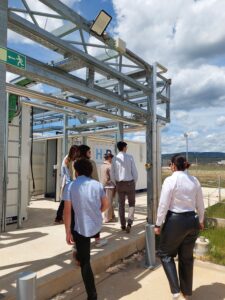
During the visit, participants explored several of the plant’s core systems and gained firsthand insight into the different stages of the green hydrogen production process, from water treatment and electrolysis to gas separation, purification and storage. Consortium members had the opportunity to observe the 3 MW electrolysis installation developed by H2B2, capable of producing up to 54 kg of green hydrogen per hour, together with key technologies such as the hydrogen purification and drying systems, the heat exchanger and the storage infrastructure with a capacity of up to 500 kg. The session sparked an active discussion, generating numerous questions and exchanges around operational processes, technological solutions and the future potential of hydrogen applications in real industrial contexts.
The General Assembly once again confirmed the importance of collaboration, open dialogue and shared expertise in advancing the green hydrogen transition and supporting the development of a stronger hydrogen ecosystem across the region.