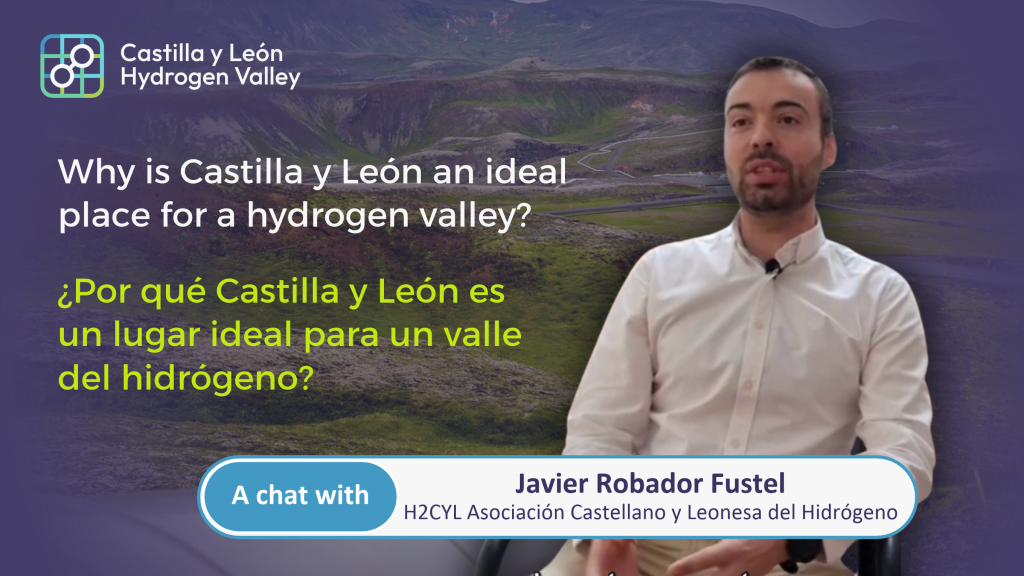
No two hydrogen valleys are alike. Castilla y León has no coastline and no large petrochemical cluster, yet that is exactly what gives its approach a distinctive character. In our latest video interview, Javier Robador Fustel, from H2CYL – the Castilla y León Hydrogen Association, explains what sets the region apart and the long-term benefits the valley can bring to the territory.
Click here and watch the full interview.
For Robador, the valley starts from a concrete industrial need. Local companies have to decarbonise through two hydrogen carriers, ammonia and methanol. By drawing on the region’s large capacity to generate renewable electricity, these processes can be electrified via hydrogen. That, in turn, creates an ecosystem ready to welcome smaller users too, whether they use hydrogen for heat or for transport.
“We are based in an industrial hub, in a region with huge renewable surpluses, and we have another distinctive feature: society as a whole supports the project.”
Collaboration is the other pillar. Project developers need someone to take up the hydrogen, and consumers need technical support and infrastructure in return. Robador points to the commitment of Burgos City Council and Juanka to hydrogen mobility, which makes the project’s refuelling station viable. The station will serve heavy and light vehicles as well as tube trailers. That means hydrogen can reach industries beyond Burgos, and private drivers who switch to a hydrogen car will have somewhere to refuel.
Being an early adopter is part of the value, too:
“We are going to bring the future into the present.”
By doing now what would otherwise arrive around 2030–2035, the region gains first-hand knowledge of the model. It can then replicate it elsewhere in Castilla y León or scale it up.
The benefits reach well beyond industry. Cutting reliance on fossil fuels means cleaner air and more liveable cities. In a largely rural region where depopulation is one of the biggest challenges, the taxes and jobs these projects generate can also open a new source of income for rural areas, giving people who want to live in a village a real chance to do so.