Spanish daily El Mundo has featured our project in the special “Energy Innovation” pages of its Actualidad Económica supplement, with an interview with Ismael Lozano Gabarre, Director of the Energy Systems area at CARTIF.
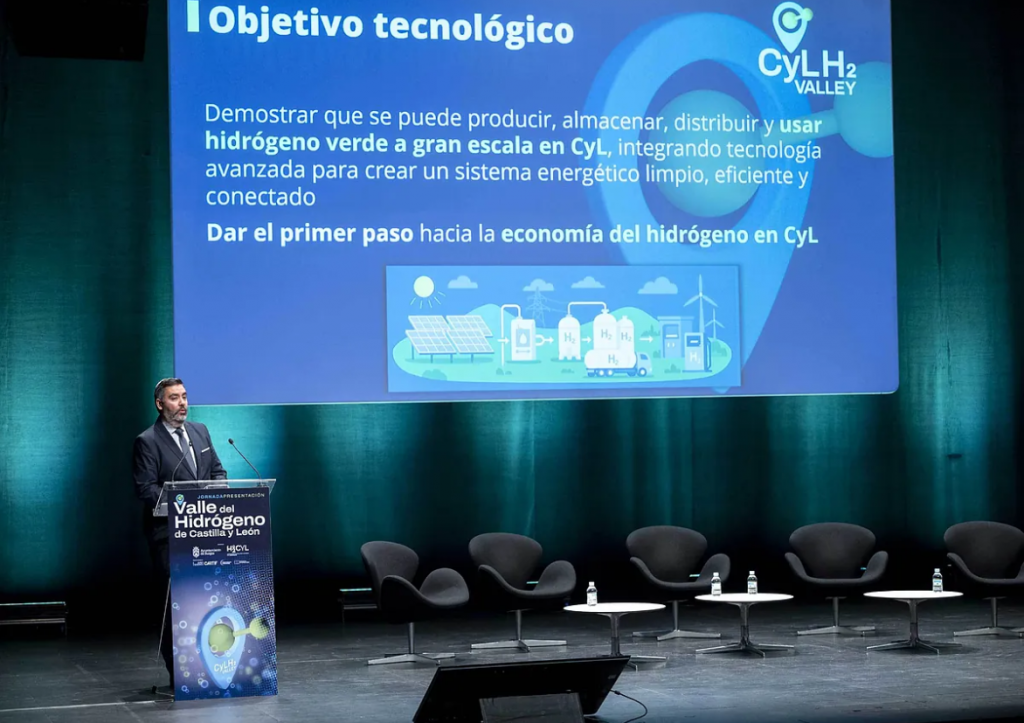
In the interview, Lozano describes the project’s ambition: to show at large scale, through ten pilots and integrated operation planned for 2028–2029, that a regional hydrogen economy is technically and economically viable.
He explains that renewable hydrogen can help cut fossil fuel use where electrification faces the greatest limits: certain industrial processes and some heavy transport applications. Castilla y León can draw on its renewable resources and industrial base to build this value chain. He also sees an opportunity for regional equipment manufacturers and engineering firms, provided hydrogen goes to applications where it makes sense in both energy and economic terms.
From demonstration to investment
The project sets out to show that hydrogen production, transport and consumption can work as a coordinated system, with reliable supply and falling costs. Lozano notes that a project of this scale requires aligning investments, industrial needs and technology development. The aim is to gain operational experience and transferable solutions that will make later investments easier.
- He names the critical challenges for a viable, scalable Hydrogen Valley:
securing demand and committing it from the early stages; - having grid access points and competitive renewable electricity;
- coordinating infrastructure and permitting procedures.
To help decide how much hydrogen to produce, store and distribute, CARTIF is developing a digital twin connected to data from the facilities. It will be used to test improvements before they are applied, for example by adjusting production to electricity prices and demand, or by sizing the storage needed to keep supply steady when renewable generation varies.
As Lozano puts it, the objective is “to reduce technical uncertainties and guide investments”.